Forest's Fungal King
A Quiet Giant in the Roots
Most of us picture fungi as soft little caps on a log. Deep in Yunnan, China, something far grander has been hiding in plain sight—anchored to woody roots, pale and massive, rising like a stone pillar from the forest floor.
Field teams from the Kunming Institute of Botany spotted large whitish fruiting bodies, called stromata, in temperate coniferous woods near Damaidi and Yipinglang and in tropical rainforest near Nanbang. The structures clung to the rhizosphere—the busy zone of soil and roots—around Chinese cork oak. They did not look like any ascomycete on the books.
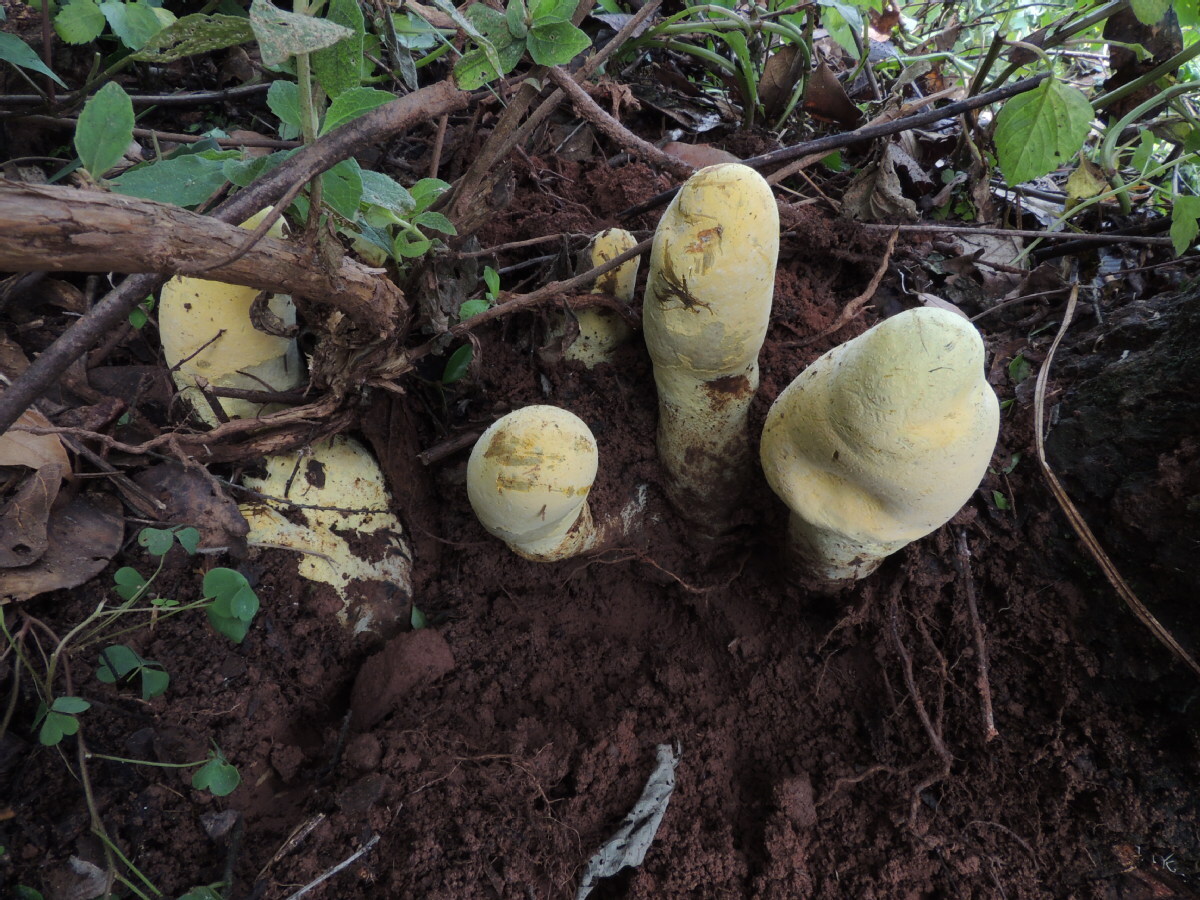
Ascomycota is the biggest fungal phylum, with more than 64,000 known species. These fungi do not make classic mushrooms. Instead they pack their spores into tiny sac-like cells set inside or on the surface of a fruiting body. What the Yunnan teams found stretched that familiar body plan to an almost regal extreme: vertical stromata up to 50 centimeters tall and weighing as much as 2.2 kilograms—the largest fruiting bodies yet recorded in the entire phylum.
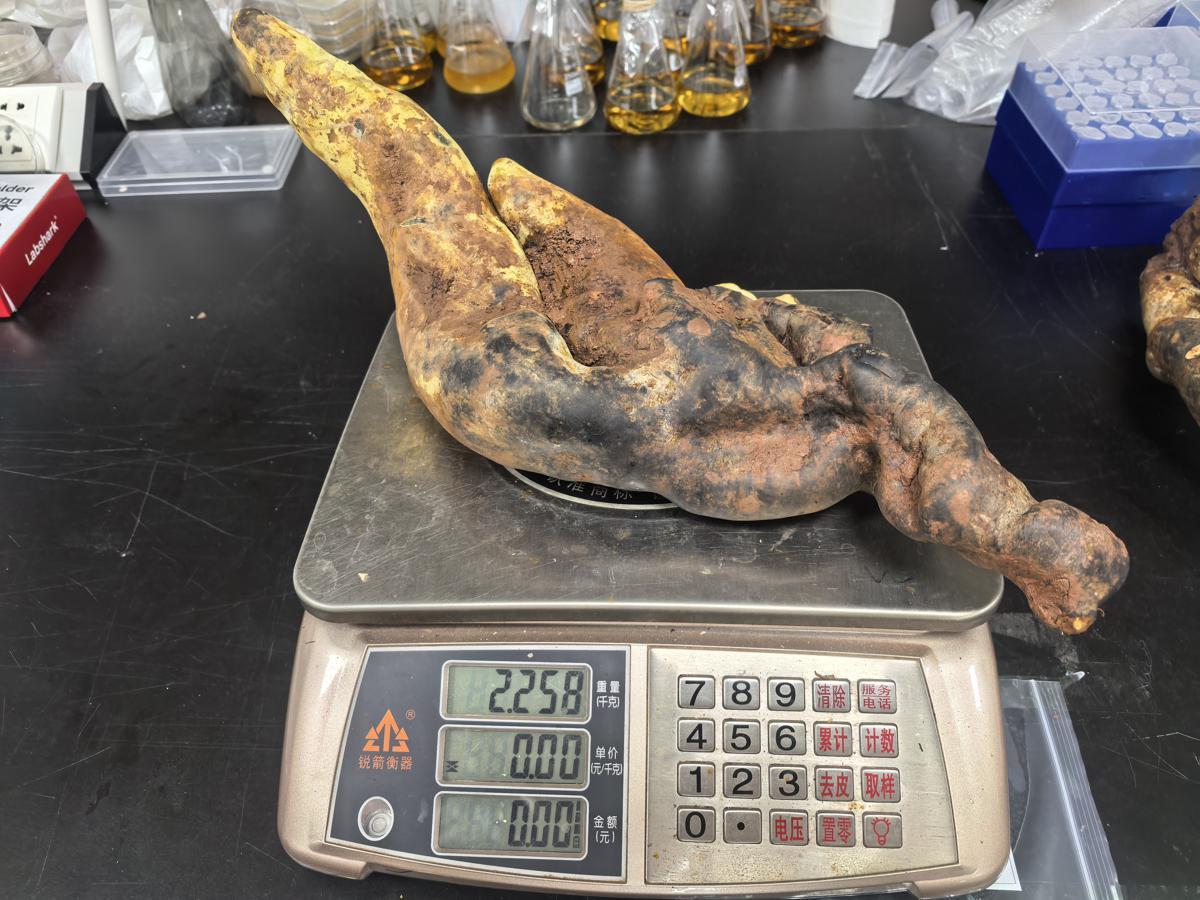
They named the fungus Dianjunus rex, nodding both to its kingly bulk and to the ancient Dian kingdom of the region. Genetic and morphological work showed it was not merely a new species. It required a new genus and an entire new family, Dianjunaceae, inside the order Xylariales.
From Forest Floor to Family Tree
Back in the lab, the scientists cultured ascospores on standard media and studied every detail of the stromata under the microscope. They pulled DNA from fresh tissue and sequenced several standard markers—ITS, LSU, RPB2, and TUB2—then built a multi-gene tree from hundreds of related strains. Whole-genome and transcriptome data from wild specimens helped lock the placement and supported a molecular-clock estimate of when the lineage branched off.
The closest living relative turned out to be Graphostroma platystoma, a northern-hemisphere hardwood dweller that sits alone in its own family, Graphostromataceae. Xylariales are already famous for secondary metabolites and for enzymes that dismantle tough plant polymers—tools that could help D. rex work through dead wood in its root-zone home.
The clock analysis placed the origin of Dianjunaceae around 65 million years ago—only about a million years after the Cretaceous–Paleogene mass extinction that erased the non-avian dinosaurs and countless other animals and plants.
“This timing raises an intriguing possibility. After the mass extinction, forests experienced dramatic changes, including the sudden availability of large amounts of dead plant material,” said Dr. Indunil C. Senanayake, associate professor at the Germplasm Bank of Wild Species of the Kunming Institute of Botany and corresponding author of the study. “For wood-associated decomposing fungi, such environmental disruption may have created new ecological opportunities.”
In other words, a world suddenly rich in fallen timber may have opened a door for wood-associated decomposers.
Why Grow So Tall?
Until this find, the tallest known ascomycete fruiting bodies topped out around 20 to 30 centimeters. D. rex nearly doubles that. Size is not free. Building and maintaining a half-meter stroma costs energy. So why bother?
Senanayake offers a working idea: a fruiting body that rises above litter and understory plants could catch more wind and send spores farther through dense forest. The payoff would have to outweigh the cost—an evolutionary bargain that may only pencil out in particular habitats.
“This remarkable species represents a new fungal family, Dianjunaceae, and provides a rare window into the evolution of extreme fungal body forms,” Senanayake noted. “The discovery illustrates how much fungus biodiversity remains to be discovered in East Asian forests.”
Those forests, the team points out, mix habitat variety, relatively stable climate, and intricate webs of living interactions—conditions that encourage fungal diversification. Historically, though, the region’s true fungal richness has been easy to miss: fruiting is seasonal and often cryptic, field access can be hard, and attention has often favored economically useful species. More surprises are likely waiting under the canopy.
A Window, Not a Finish Line
The work is a careful taxonomic and genomic description—morphology, culture, multi-locus phylogeny, genomes, and a dated tree—not a claim that every corner of Yunnan has been surveyed. Specimens are vouchered at the Kunming Institute of Botany so others can check, compare, and build on the result. Comparative enzyme annotations hint at wood-decay capabilities typical of the broader order.
What lingers is a simple, hopeful image: a Paleocene-age lineage still fruiting in modern Chinese forests, quietly rewriting the upper size limit for ascomycetes and reminding us that the ground under our feet still holds kings we have not yet met.
“The discovery illustrates how much fungus biodiversity remains to be discovered in East Asian forests.” — Indunil C. Senanayake