Cold-Hardy Alloys
A metal that won’t freeze up
Picture a wrench left overnight on a polar ice sheet. Most ordinary metals stiffen in the cold; some turn fragile, the way a plastic ruler snaps instead of flexing once it has sat in a freezer. A crack that a warmer sample could blunt by bending becomes a clean break.
That brittle turn is a long-standing headache for body-centred cubic metals—iron, tungsten, chromium, and their cousins, whose atoms pack in a particular cubic lattice. Cooling usually makes them stronger, yet it also locks up the usual routes for plastic flow. Engineers who need parts for deep-space tanks, liquefied-gas systems, or anything that must survive both scorching heat and arctic chill have had to work around that trade-off.
An international team led from the University of California, Berkeley, Lawrence Berkeley National Laboratory, and the University of Oxford has now watched two experimental niobium-titanium alloys refuse the usual script. At about 20 kelvin—roughly −253°C—the metals stayed remarkably damage-tolerant, with no measurable slide into brittle fracture at the lowest temperature tested. The findings appear in Nature.
Why cold usually wins
In everyday language, metals “give” when line-like flaws called dislocations glide through the crystal. Those moving lines let the lattice rearrange and absorb energy around a crack tip. In body-centred cubic metals, that glide grows sluggish as the temperature plunges. With fewer mobile dislocations, stress piles up and a crack can race ahead.
The alloys in this study—Nb45Ta25Ti15Hf15 (a medium-entropy mix of niobium, tantalum, titanium, and hafnium) and the simpler binary Nb70Ti30—were prepared by arc-melting high-purity elements, forged or cross-rolled, then heat-treated and quenched so they finished as recrystallized body-centred cubic microstructures. Researchers then chilled them on the ENGIN-X beamline at the ISIS Neutron and Muon Source, using gaseous helium inside a vacuum chamber, and pulled them in uniaxial tension while tracking fracture toughness with nonlinear-elastic J-integral tests.
Opening new routes when the old ones freeze
What the microscopes revealed afterward is the heart of the story. As conventional dislocation motion stalled, the alloys switched tactics. Nanoscale twinning appeared: small pockets of crystal flipped into mirror-image orientations. That twinning was coupled with a local change in crystal structure. When these freshly rearranged regions reached the boundaries between neighbouring grains, they concentrated stress and nucleated brand-new defects.
Those new defects kept the metal flowing instead of fracturing. Think of a winter road network: when the main highways ice over, side streets open and traffic still moves. Here, twins and the accompanying phase shift create fresh on-ramps for plasticity precisely where the old dislocation highways seize up. Stress that would otherwise pry a crack open is instead spent on more deformation.
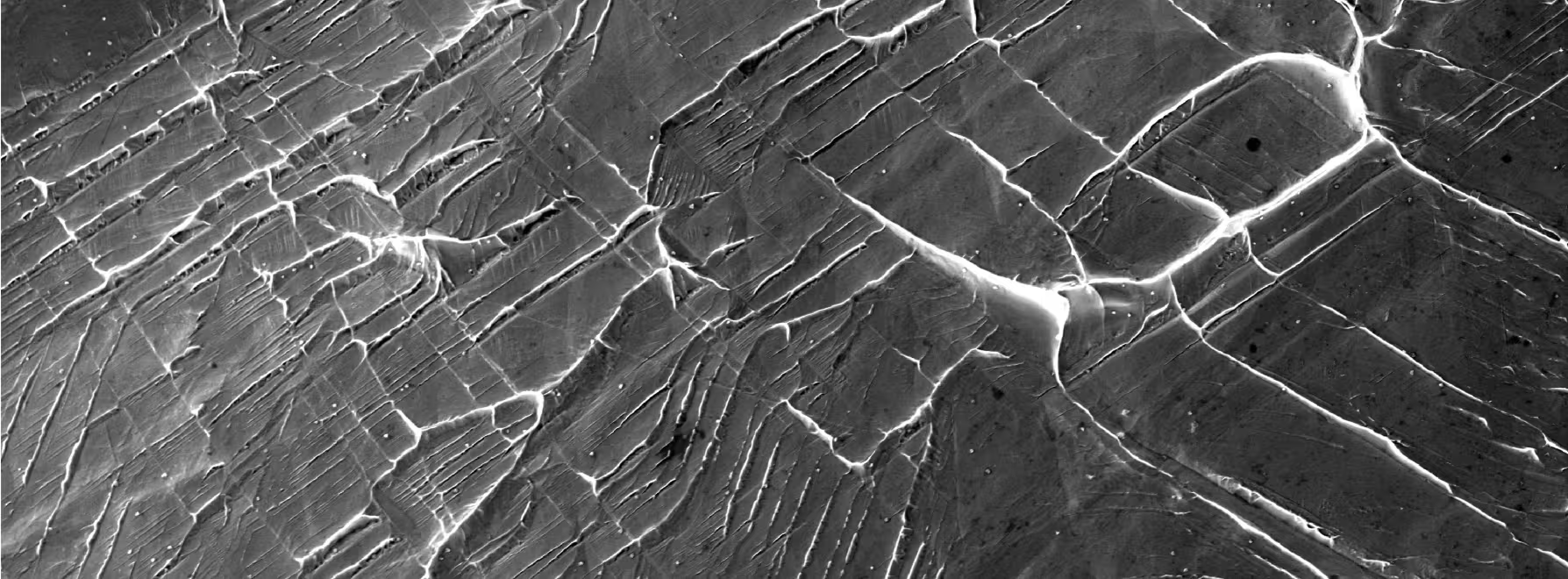
Post-test work—scanning electron microscopy fractography, electron backscatter diffraction, transmission electron microscopy and 4D-STEM, atom-probe tomography that maps individual atoms, plus atomistic simulations—traced that sequence in detail. The picture that emerges is cooperative rather than single-mechanism: twinning and phase transformation generate the conditions for new dislocations to appear at interfaces before the classic glide routes fully recover.
Oxford corresponding author Professor Dong Liu put the surprise plainly: “For decades, the ductile-to-brittle transition has been viewed as a fundamental limitation of body-centred cubic metals. What surprised us is that these alloys remain remarkably damage tolerant even at 20 kelvin. By uncovering how twinning and phase transformation work together to generate plasticity before conventional dislocation motion, we identified a new pathway for designing structural body-centred cubic metals that can operate in extreme cryogenic environments. This class of materials will be extremely useful for components experiencing extreme hot and cold temperatures in one application.”
Lead author Dr David Cook, who carried out the work at Berkeley and is now at Cambridge, framed the conceptual shift: “Our results suggest we should change how we think about what governs the transition to brittleness for these metals. Traditionally, the focus was on how readily existing dislocations can move through a metal but now it appears that the ability to create new dislocations at interfaces may also be critical. Using these insights, we may be able to design underlying microstructural conditions that allow a material to create its own routes to remain ductile at extreme temperatures.”
Design rules, not miracles
The study is careful about scope. These are two carefully processed experimental alloys tested under laboratory cryogenic conditions; they are not yet off-the-shelf hardware. The researchers treat the ductile-to-brittle transition as a designable competition among mechanisms rather than an iron law, and they point toward microstructural conditions—interfaces, twinning propensity, phase stability—that future alloys might deliberately cultivate.
Still, the practical horizon is inviting. Energy systems that handle liquefied gases, transport in polar or high-altitude settings, and aerospace structures that swing between solar heat and deep shadow all need metals that stay forgiving when the thermometer bottoms out. A strategy that lets a body-centred cubic alloy “invent” new deformation paths at the coldest temperatures expands the palette without abandoning the strength and temperature range those lattices already offer.
Collaborators spanned Berkeley, Lawrence Berkeley National Laboratory, Oxford, Bristol, the ISIS facility, UC Irvine, Pacific Northwest National Laboratory, Texas A&M, and Nanyang Technological University. Together they turned a neutron beamline, electron microscopes, atom probes, and simulations into a clear deformation sequence: when the familiar routes freeze, twinning and local transformation open new ones, and the metal keeps bending.
Twenty kelvin is an unforgiving classroom. That these niobium-titanium alloys can still learn new ways to yield there feels less like a loophole and more like an invitation—to build the next generation of cold-ready metals by teaching their microstructures how to open side streets when winter arrives.
"Using these insights, we may be able to design underlying microstructural conditions that allow a material to create its own routes to remain ductile at extreme temperatures." - David Cook