Healing Coral Touch
When a Touch Restores Life
Picture a reef after a marine heat wave: pale skeletons where living gardens once thrived. Corals have not simply faded for show. They have expelled the tiny photosynthetic algae that live inside their tissues and feed them. Without those partners, the animals starve, grow ghostly white, and become easy targets for unwanted overgrowth.
If they survive at all, full recovery in the wild can take months to years. That slow rebound is why bleached colonies often feel like a lost cause.
But they are not dead yet.
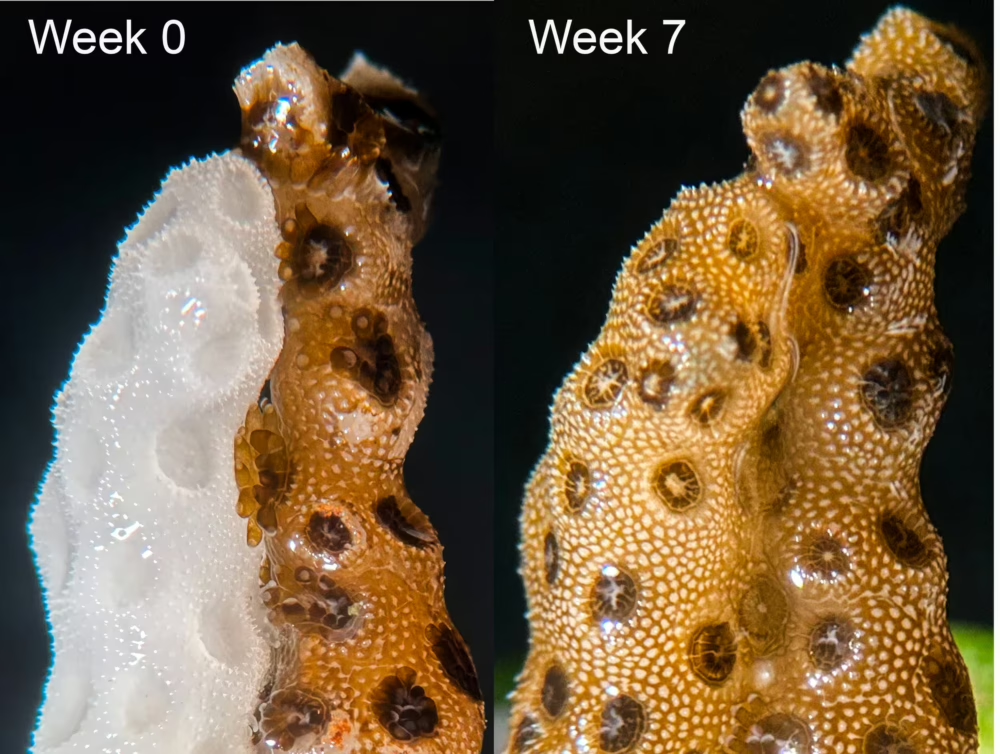
In aquarium tanks at Hopkins Marine Station, a Stanford team watched something quietly astonishing. Bleached fragments of the branching coral Pocillopora damicornis—still clinging to life—regained their color and their algal partners after only brief physical contact with healthy clones. Within seven weeks they looked whole again. That is the fastest recovery of this kind the researchers have documented so far.
A Chance Tip, Then a Careful Test
The spark was almost accidental. Coauthor Steve Palumbi noticed two fragments from the same colony—one bleached, one healthy—had tipped over in a tank and begun to touch. Color crept back into the pale piece right where the tissues met.
Lead author Danny Collins, an oceans PhD student at the Stanford Doerr School of Sustainability, was already thinking about how contact moves things between corals—sometimes harmful bacteria hitchhiking on debris. What if contact could move something helpful instead?
He set up a clean experiment. Ten pairs of fragments, each pair drawn from the same animal so the genetics matched. Five pairs were placed so they could touch. The other five sat a few millimeters apart. The bleached partners that touched recovered fully in seven weeks. The ones kept at a gap died.
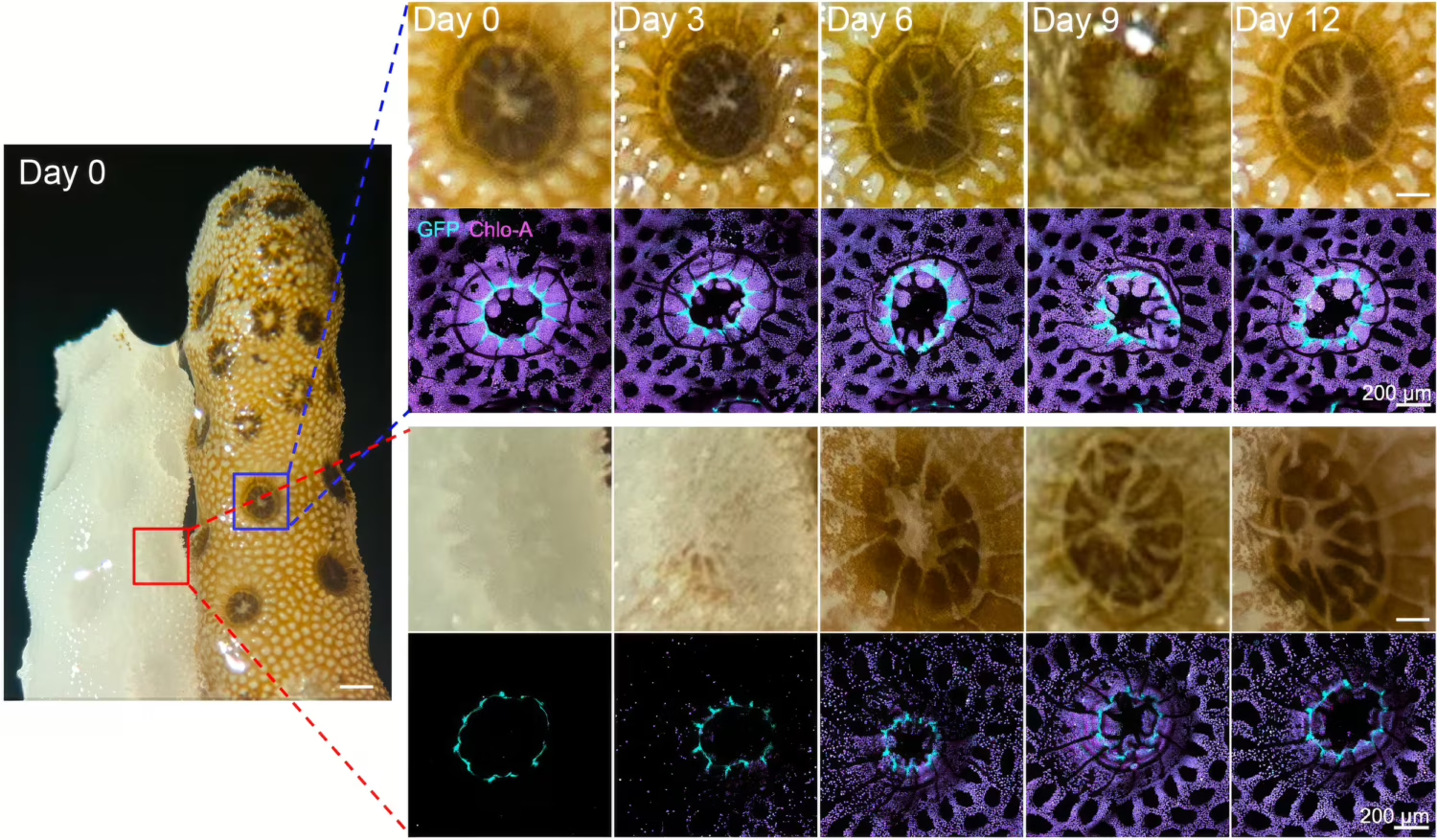
Corals that share a genotype recognize one another. Their tissues can fuse, a little like how an organ transplant has a better chance between identical twins. Under a powerful microscope, the team saw microscopic channels in the tissue line up soon after contact. Those channels became pathways. Beneficial algae—and the nutrients they produce—began to move.
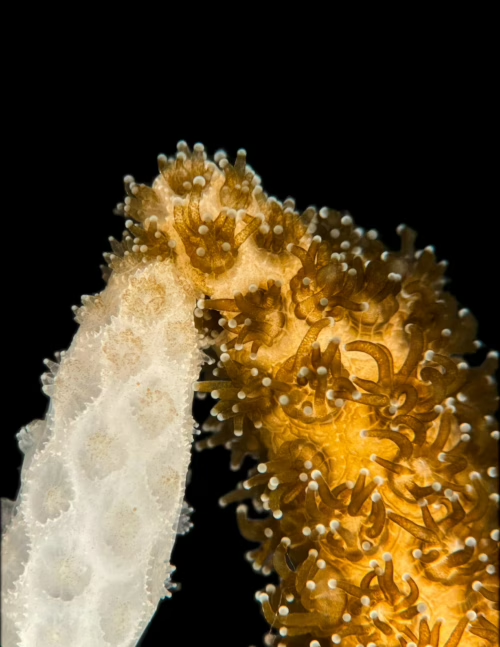
Within three days of contact, the algae were already crossing from healthy tissue into bleached tissue.
A Short Loan Is Enough
Contact did not have to last forever. When the researchers separated pairs after different stretches of time, a week of contact—and in some cases just five days—was enough. The bleached fragments had received a starter population of algae and could finish healing on their own. After separation, recovery still wrapped up in about seven weeks, matching pairs left touching the whole time.
That detail matters. Once the algae arrived, most of the continued rebound came from the newcomers dividing inside the bleached coral, not from a steady drip of more cells from the donor. During the second week of contact, algae inside the recovering fragments doubled roughly every four days—about ten times the pace often seen in wild corals.
In plain terms: a healthy neighbor can hand over a living spark. Then that spark multiplies fast enough to repaint the colony from within.
The lab work used aquarium-kept Pocillopora fragments hosting Cladocopium algae. Researchers heat-stressed them with daily ramps that peaked at 34.5°C for four hours, repeated over 12 to 16 days, until the familiar color drained away. Recovery was tracked by watching polyps, pigmentation, and algal density under stereomicroscopes and confocal microscopes—tools that let scientists count the living partners cell by cell.
Hope With Clear Eyes
Fiorenza Micheli, a faculty advisor on the work, notes that bleached corals are often written off because rebound after a heat wave is painfully slow when it happens at all. The team’s hope is that faster first aid could buy time for the slower natural processes—growth, reproduction, and new colonies settling in—to catch up.
The researchers are careful not to oversell the method as a reef-scale fix. Direct contact requires a genetically identical healthy twin for every struggling piece, which is not practical across whole ecosystems. That limit is real. It is also a roadmap. In the months ahead, the group plans to test ways to deliver beneficial algae without continuous tissue-to-tissue contact—perhaps collecting algae from healthy corals well before heat waves and offering them in batches when bleaching hits.
Other restoration tools already in play include breeding for heat tolerance, growing nursery corals for outplanting, and reshaping coral microbiomes. This contact-driven transfer adds a different idea to the toolkit: corals can, under the right conditions, share the very partners that keep them alive.
Collins framed the core question simply. Once a coral has bleached, what can we do? The lab answer is not magic and not a finished field protocol. It is a demonstration that pale colonies can still accept help, that a few days of connection can seed a rapid internal comeback, and that the living machinery of reefs still holds surprises worth chasing.
Seven weeks from white to whole, in a tank, after a handshake between clones. The open frontier is translating that neighborly gift into something reefs can use when the next warm spell arrives.
"These new insights into how corals can naturally recover give us hope for the future." — Fiorenza Micheli
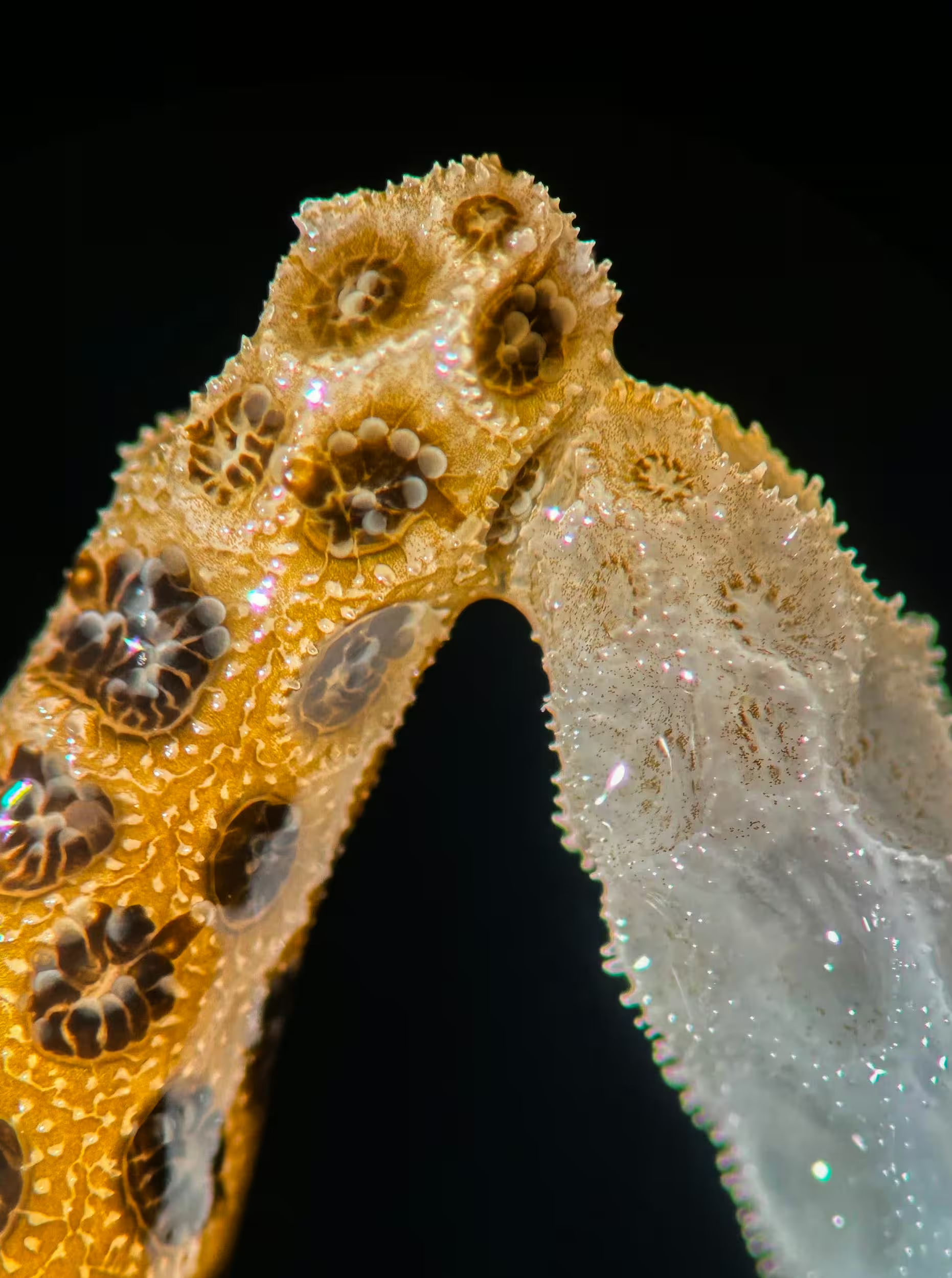 Beneficial algae moved from healthy corals (left) to bleached corals (right) within three days of contact.
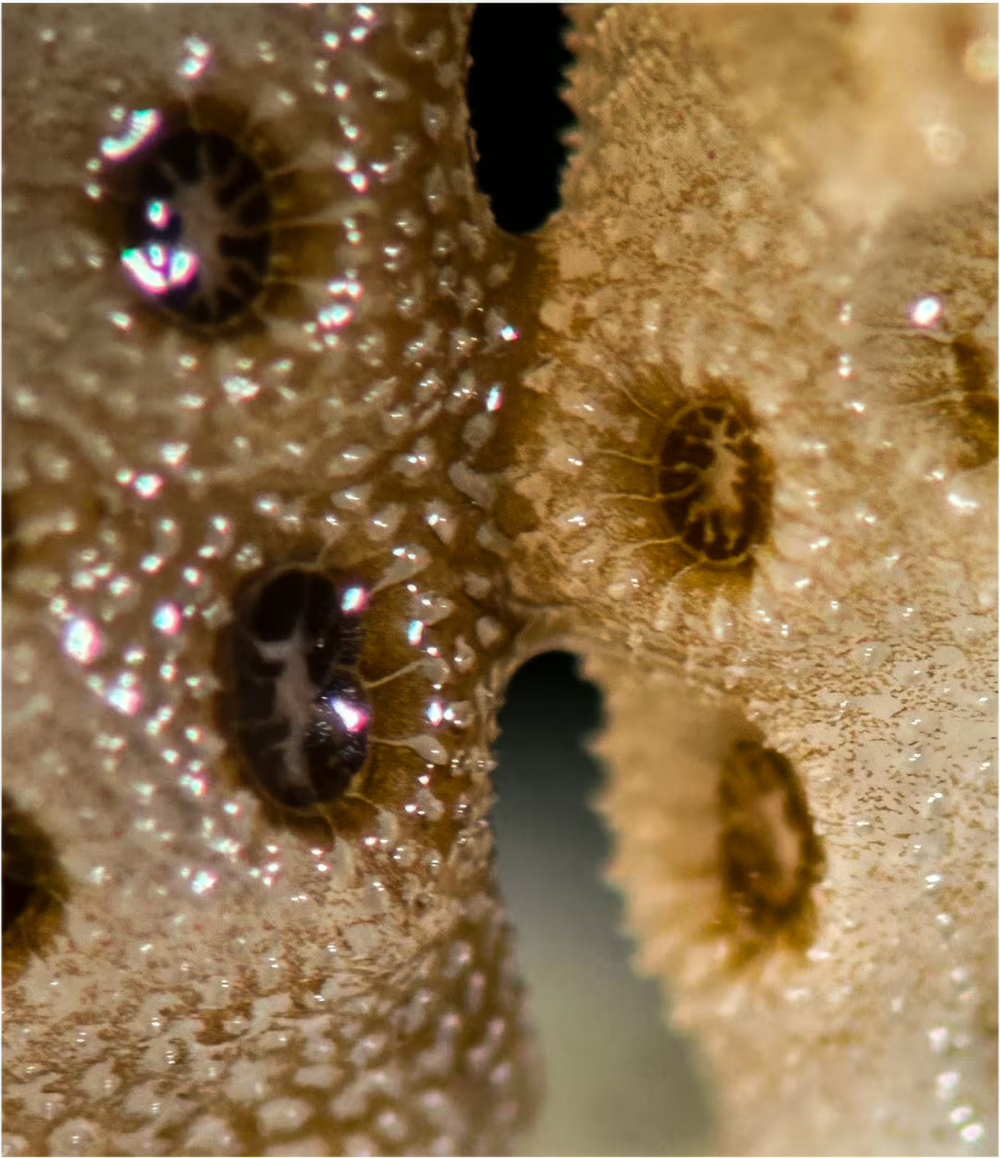 By fusing tissues, healthy corals send enough life-giving algae and nutrients to their bleached counterparts to kickstart the recovery process.
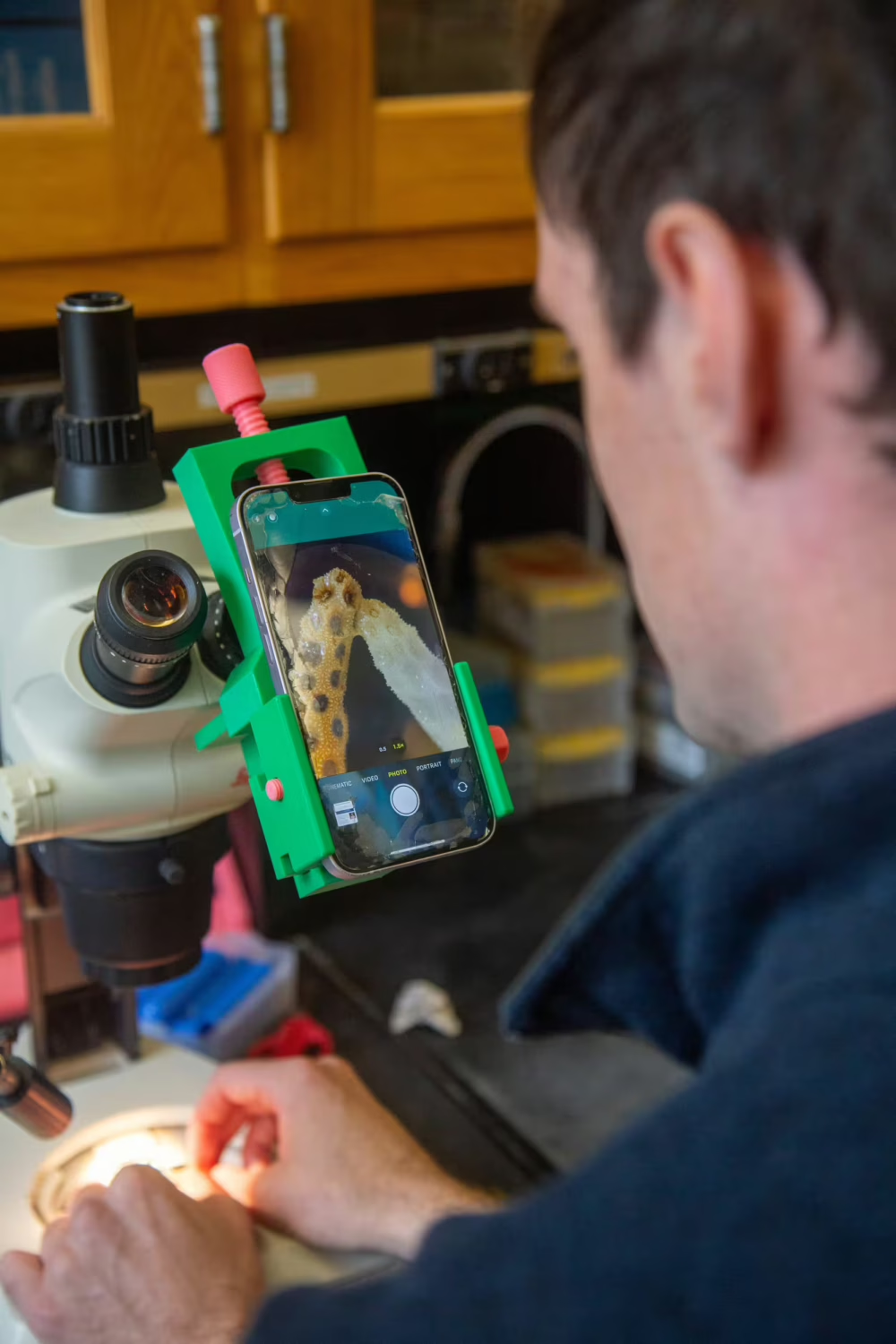 To document coral recovery, Collins attached a phone to a microscope using a 3D-printed device designed by Tom Rolander, a research engineer in the Fabrication Lab at Hopkins Marine Station.