Forgotten Layers Fresh Promise
A treasure hunt in plain sight
Somewhere in a dusty crystallographic file from decades ago, a thin, layered crystal sat unnoticed—chemically real, experimentally made, yet invisible to a research field that only named its family in 2011.
That family is MXenes: stacks just a few atoms thick, built from a metal paired with carbon or nitrogen. Because they are so flat, a gram of the stuff offers an almost absurd amount of surface for chemistry to happen. Water cleanup, energy storage, telecom devices, biomedicine—the wish list is long, and much of it still unexplored.
Researchers at Linköping University, working with colleagues in Estonia and Finland, decided the best way forward might be to look back. With machine learning and supercomputers, they combed public materials databases and the scientific literature for structures that quietly matched the MXene pattern. They unofficially called the effort the Treasure Chest Project. The lid, it turned out, was full.
Thirty-three found, eleven born
The team trained a model on crystallographic information files so it could tell multilayer MXene-like phases apart from other layered solids. They screened crystal structures from the Materials Project and the Open Quantum Materials Database for compositions that fit the classic M2XT2-like recipe, then curated older papers to catch compounds databases had never tagged as MXenes.
The haul: 33 already existing MXenes the modern field had largely missed. Inspired by that map, they went into the lab and made 11 more—new compositions that expand the family’s palette.
Among the fresh arrivals are rare-earth versions. Swap in those elements and the sheets can pick up magnetic behavior, opening doors the original metal-carbon-nitrogen lineup never quite reached.
“We need to look both backwards and forwards to accelerate materials science,” says Johanna Rosén, Professor of Materials Physics at Linköping. “There’s so much information in the literature that we’re not aware of. We as researchers sometimes reinvent the wheel and claim to have made great discoveries – but then it turns out they were already made in Germany, for example, in the 1970s.”
Her framing is generous rather than scolding: the past is inventory, not embarrassment. “The literature and databases are treasure troves – you just have to open the lid and see what’s there.”
Minutes, not marathons
Finding names on a list is only half the story. The Linköping-led group took a different route to making MXenes: a rapid, self-propagating high-temperature synthesis. Once started, the reaction runs on its own heat—no sustained external heating—and finishes within minutes. The press account from the university even describes the process wrapping up in just a few seconds without external heating. Either way, the practical point lands the same: significantly fewer hazardous chemicals and much less water than previous methods.
The new phases were checked with diffraction, electron microscopy, and electronic-structure calculations—standard reality checks that the crystals really are what the algorithms promised.
First author Ali Saffar Shamshirgar, a researcher at Linköping, puts the excitement in application terms. “MXenes can have a wide range of useful properties, many with potential applications in sustainability. Discovering new compositions gives us the opportunity to explore even more possibilities for how these materials can be used.”
Picture a film only a few millimeters thick that still packs millions of layers. Between those layers, many different chemical reactions can take place, depending on the composition of the sheets—and that chemistry underpins properties suited to water purification, energy storage, telecommunications, biomedicine, and more. More compositions mean more knobs to turn.
Scaling the thin stuff
Rosén is candid about what still has to happen. Lab grams are not factory tons. Yet she sees synthesis itself as the lever that could matter most. With cleaner, faster routes arriving across the field, manufacturing can grow. “I think it’s the scaling up that will push MXenes over the edge to actually being significantly more used in different applications.”
That is diligence, not dampening. The work remains early in the long arc from crystal to device; water filters and batteries will need their own engineering chapters. What this study delivers is a fuller catalog, a gentler recipe, and proof that rare-earth magnetism can join the MXene toolkit.
Funding came largely from the European Research Council, the Swedish Research Council, the Knut and Alice Wallenberg Foundation, the Wallenberg Initiative Materials Science for Sustainability (WISE), and the Estonian Research Council, with supercomputing via Sweden’s NAISS network and microscopy through ARTEMI.
So the next time someone says the periodic table is finished business, remember the treasure chest. Somewhere in an old database, another few-atom sandwich may already be waiting—ready for a spark, a short self-heating flash, and a second chance to matter.
"The literature and databases are treasure troves – you just have to open the lid and see what’s there." — Johanna Rosén
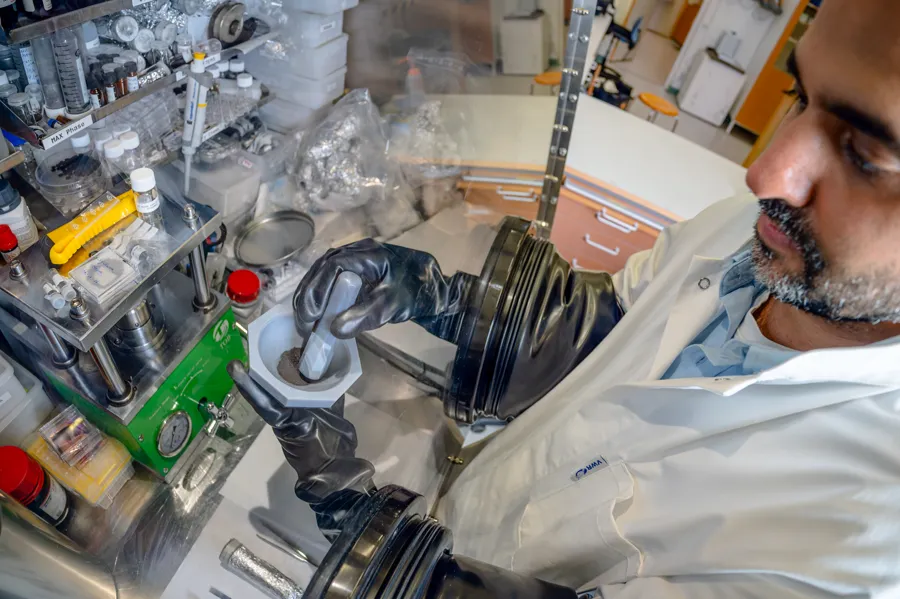 making MXenes can now be done easier than before.
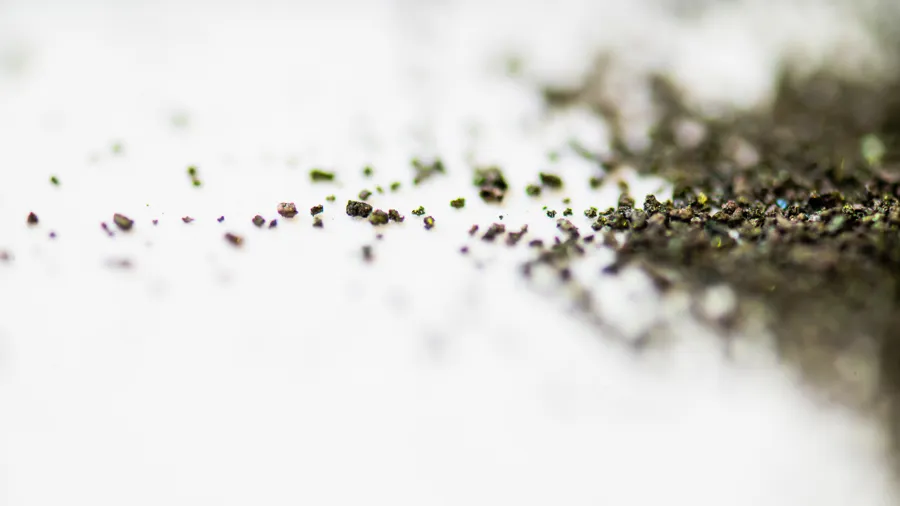 In one gram of MXenes there is an enormous surface for reactions to take place.
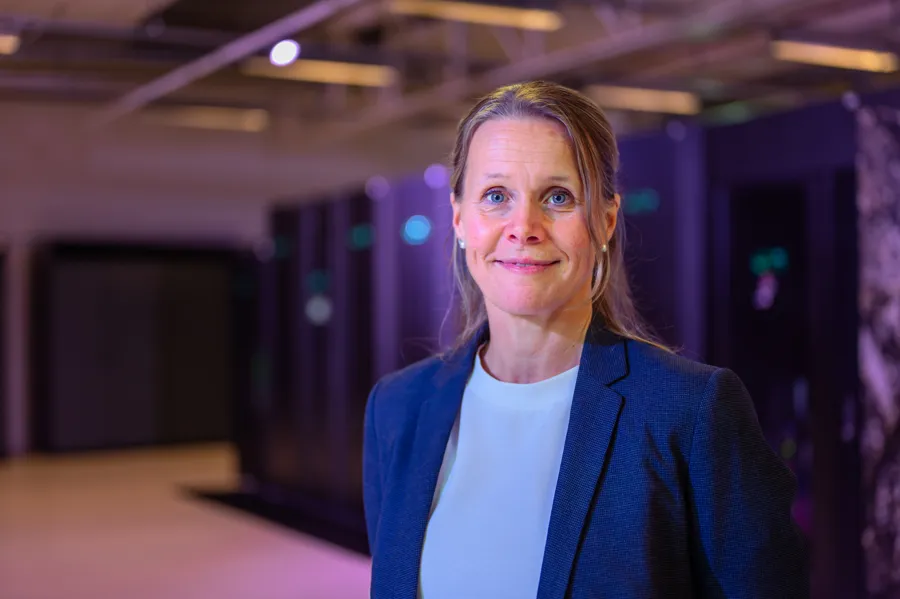 Johanna Rosén, Professor of Materials Physics at Linköping University.
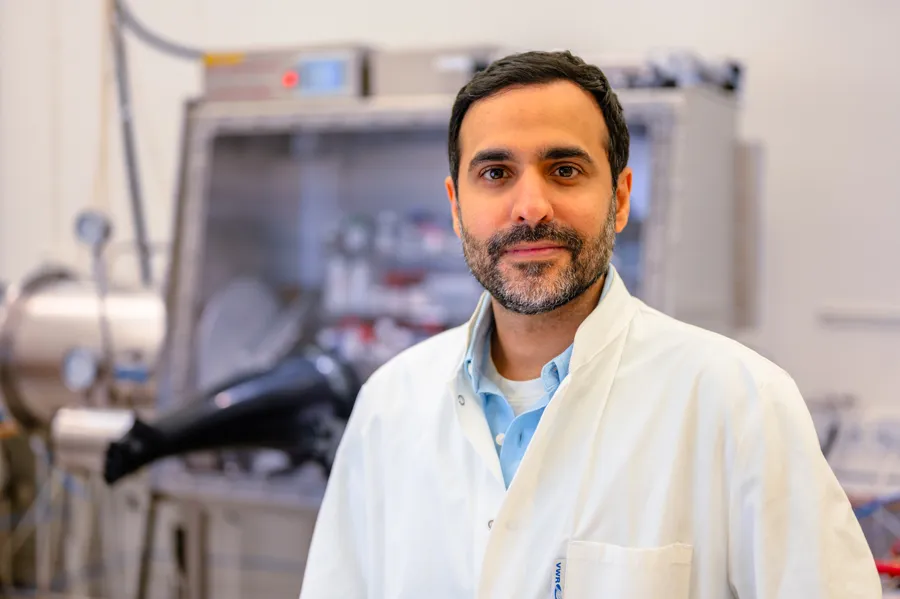 Ali Saffar Shamshirgar, researcher at LiU and first author of the article published in Science.