Clearing Alzheimer’s Plaques
Researchers at Karolinska Institute in Sweden and the RIKEN Center for Brain Science in Japan have identified two receptors in the brain that control the breakdown of amyloid beta, a substance that accumulates in Alzheimer’s disease. According to the researchers, the study could pave the way for future drugs that are both safer and cheaper than current antibody treatments.
Alzheimer’s disease is the most common form of dementia and is characterised by the protein amyloid beta (Aβ) forming plaques in the brain. An enzyme that breaks down Aβ is neprilysin, but its activity decreases with age and in the presence of disease. Now, an international team of researchers has demonstrated that two somatostatin receptors, SST1 and SST4, together regulate neprilysin in the hippocampus – a brain region important for memory. The study has been published in the Journal of Alzheimer’s Disease.
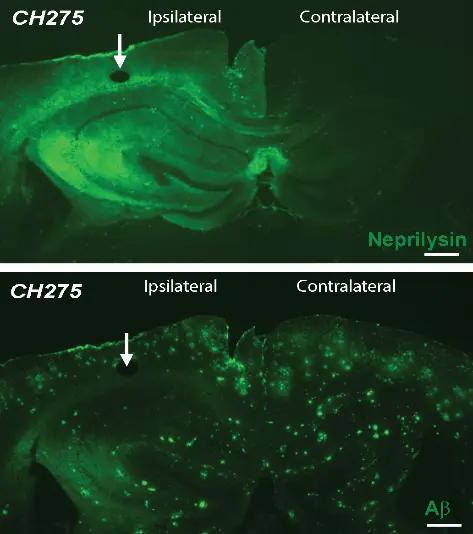
The results are based on analyses of genetically modified mice and cell cultures. When both receptors were absent, the amount of neprilysin decreased, leading to increased Aβ accumulation and impaired memory in the mice. The researchers also tested a substance that activates SST1 and SST4. In mice with Alzheimer’s-like changes, neprilysin levels increased, Aβ decreased, and behavior improved without any serious side effects.
“Our findings show that the brain’s own defence against amyloid beta can be strengthened by stimulating these receptors,” says Per Nilsson, docent at the Department of Neurobiology, Care Sciences and Society, Karolinska Institutet.
Currently, the most advanced Alzheimer’s treatments are based on antibodies. These are associated with very high costs and can, in some cases, cause serious side effects.
SST1 and SST4 are so-called G protein-coupled receptors, which are often well-suited as targets for drug treatment. Drugs that target G protein-coupled receptors are generally inexpensive to manufacture and can be taken as tablets.
“If we can instead develop small molecules that pass the blood-brain barrier, our hope is that we will be able to treat the disease at a significantly lower cost and without serious side effects.” - Per Nilsson