
Decoding Dinosaur Footprints
DinoTracker
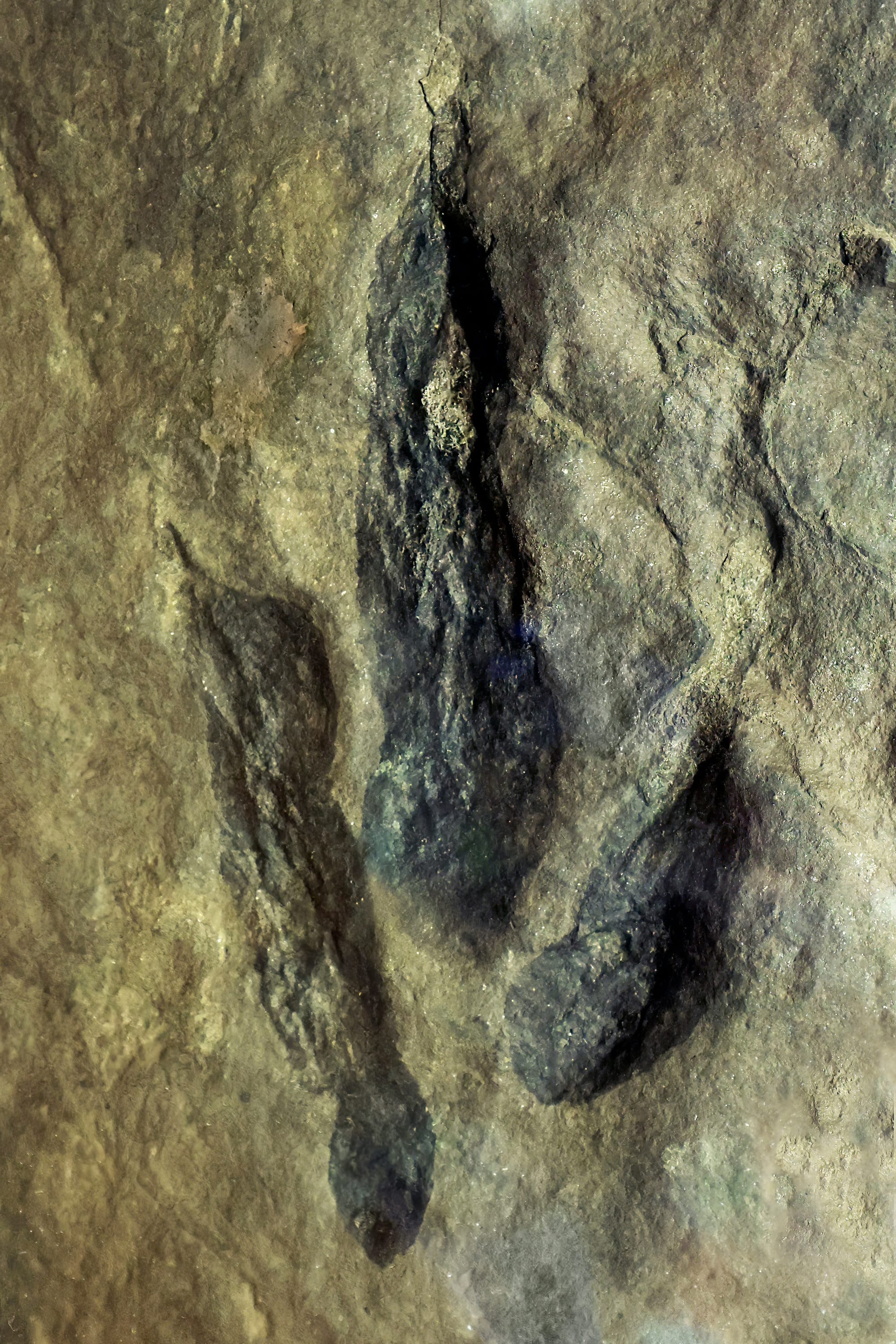
Now, researchers and dinosaur enthusiasts alike can upload an image or sketch of a dinosaur footprint from their mobile phone to the DinoTracker app and receive an instant analysis.
Fossilised dinosaur footprints are an important indicator of pre-historic life but previous research has shown that they are notoriously difficult to interpret.
Traditional methods required researchers to manually compile computer datasets in which specific tracks were assigned to specific dinosaurs, which could introduce bias, experts say.
Advanced algorithms
Researchers led by the Helmholtz-Zentrum research centre in Berlin, in partnership with the University of Edinburgh used advanced algorithms to enable computers to train themselves to recognize variations in the shape of dinosaur footprints.
Their AI model schooled itself on nearly 2,000 fossil footprints, plus millions of additional variations to mimic realistic changes, such as compression and edge displacement.
Footprint variations
It identified eight key features of footprint variation, including the spread of the toes, the position of the heel, the size of contact area the foot made while striking the ground and the amount of weight placed on different parts of the foot.
With the variations recognized, the computer program was then able to predict which dinosaur made the tracks based on comparisons to existing fossil footprints.
High accuracy
The algorithm achieved around 90 percent agreement with the classifications made by human experts, even for contentious species.
Most intriguingly, the network found that several dinosaur tracks, made more than 200 million years ago, share uncanny features with extinct and modern birds.
This suggests that birds could have originated tens of millions of years earlier than previously thought, or alternatively, that some primitive dinosaurs actually had feet that coincidentally resembled those of birds to a high degree, the team says.
Mysterious footprints
The system also indicated that some long-mysterious footprints from the Isle of Skye in Scotland, which were impressed on the muddy shore of a lagoon around 170 million years ago, might have been made by some of the oldest relatives of duck-billed dinosaurs known from anywhere in the world.
The research opens up fresh possibilities for understanding how dinosaurs lived and moved across the earth and gives everyone the opportunity to become their own fossil footprint investigator.
"This study is an exciting contribution for paleontology and an objective, data-driven way to classify dinosaur footprints – something that has stumped experts for over a century.
It opens up exciting new possibilities for understanding how these incredible animals lived and moved, and when major groups like birds first evolved. This computer network might have identified the world’s oldest birds, which I think is a fantastic and fruitful use for AI." - Steve Brusatte
"Our method provides an unbiased way to recognize variation in footprints and test hypotheses about their makers. It’s an excellent tool for research, education, and even fieldwork." - Gregor Hartmann